Safari Overview
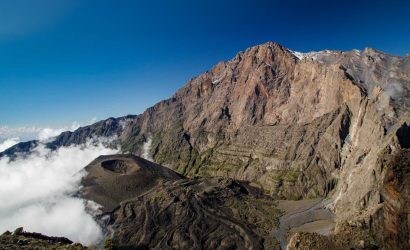
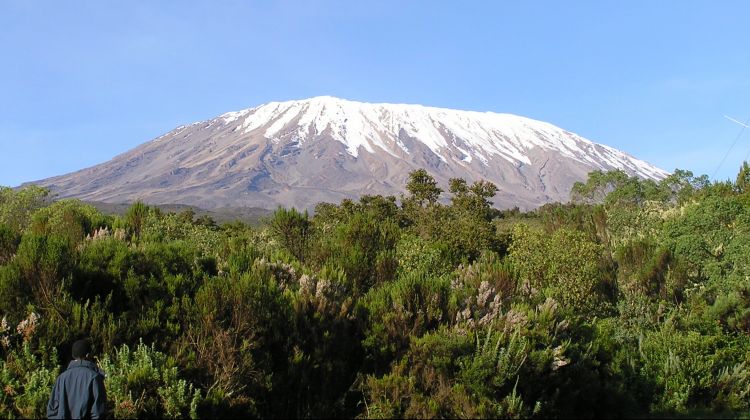
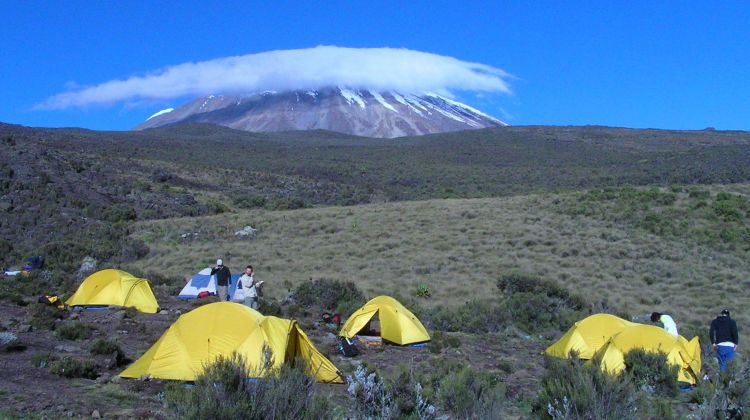
Rongai route approaches Kilimanjaro from the north-eastern section of the mountain, not far from the Kenyan border. It is considered quite remote but has seen a surge in trekkers in recent years. On this route, the drive to the trailhead at Nale Moru is long but the road is tarmac most of the way. With a starting point in Arusha, the routes on the souther or western side are more popular because of accessibility. On this route, we camp at the base of Mawenzi Peak before walking across the Saddle to perch ourselves in the the busy camp of Kibo in readiness for the summit assault.
Trip Highlights
- Rongai route is best option during the rainy season
- The Rongai Route is the only route to ascend up the North side of the mountain.
- Less crowded way to ascend Mount Kilimanjaro and also close view of Mawenzi Peak
Detailed Itinerary
Pick up from the Airport Kilimanjaro airport and transfer to a budget hotel in Moshi
Mt Kilimanjaro climbing briefing, Meet your guide and porters before you begin your hike from the Nale Moru village. The small winding path crosses maize fields before entering pine forest, and then climbs gently through a forest. The trail is not at all steep, but is rather a gentle hike. The first nights camp is at First Cave, at about 2,600 metres. There is a toilet and a wooden table with benches, but no hut. Water can be found just down the trail below First Cave.
(Hiking time: 6-7 hours) The trail continues up towards Kibo, passing Second Cave (3450m) en-route, and reaching Kikelwa Cave at about 3600 metres. The views start to open up and you begin to feel you are on a really big mountain! Water is in the obvious stream below the cave, although you might have to wander downhill a way to find some. Overnight at 3rd Cave camp
(Hiking time: 3-4 hours) A short but steep climb up grassy slopes offers superb views of this wilderness area. The vegetation zone ends shortly before you reach your next camp at Mawenzi Tarn spectacularly situated beneath the towering spires of Mawenzi. Spend the afternoon acclimatizing and exploring the area.
(Hiking time: 3-4 hours) Continue ascending on the east side of Kibo crossing the saddle between Mawenzi and Kibo taking 4 to 5 hours to reach Kibo Hut. The remainder of the day is spent resting in preparation for the final ascent, which begins around midnight. Overnight at Kibo Camp
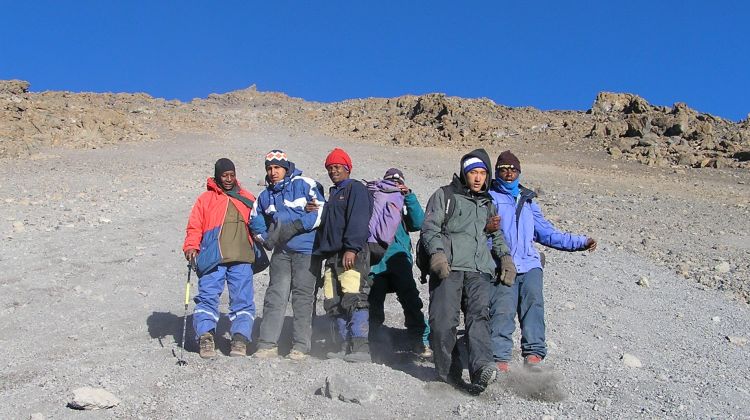
You will rise around 23h30, and after some tea and biscuits you shuffle off into the night. This is where the going really gets tough. The first section of the trail consists of a rocky path to the Hans Meyer Cave (5150m), also a good resting spot. The path then zigzags up to Gillmans point (5 681m), which is located on the crater rim. This section is very steep with a lot of stone scree, requiring a great physical and mental effort. Probably the most demanding section of the entire route. Do the Kili shuffle and move slowly. From Gillmans Point you will normally encounter snow all the way up to Uhuru peak (5895m), the highest point in Africa. Total exhilaration and satisfaction – you made it. Weather conditions on the summit will determine how long you can spend, taking photographs, before the 3-hour descent back to Kibo hut. After a short rest you gather all your gear for the ascent and head down to Horombo hut (3 hours) where you will overnight.
(Hiking time: 3-4 hours) After breakfast you continue your descent (6 hours), passing the Mandara hut, down to the Marangu gate
What's Included
- All applicable taxes and VAT
- All park entrance, conservation, camping/hut and rescue fees
- English-speaking, KINAPA-certified mountain guides (according to required ratios)
- 1 porter per person (up to 15 kg of luggage)
- Specialised tent team to set up and maintain camp
- KPAP check for fair treatment of porters
- Trained mountain chef and waiter
- All mountain meals including eating utensils (cutlery, bowls, cups, etc.) )
- Preliminary briefing and equipment check in Arusha
- 1 group transfer from lodge in Arusha to park gate
- 1 group return transfer from gate to lodge in Arusha
- Crew transport to remote gates (Lemosho/Rongai)
- Secure luggage storage during the trek
- Boiled drinking water from first hut/ camp
- 1 emergency oxygen bottle per 5 climbers + first aid kit kit
- Two daily health checks with medical oximeter
- Shared use of public toilets at huts/camping sites
- 1 rubber duffel bag of approx. 100 L per person
- Basic sleeping mattress (for hut routes)
- Shared use of mountain huts or 4-season tents, including chairs, tables and dining tent (on camping routes)
What's Not Included
- All personal travel insurances
- All personal expenses including; telephones, tips, alcoholic drinks, laundry, etc
- Sleeping bags and climbing gears
- Medical evacuation, USD 30 per person value
- International flights and Airport taxes
- Visas
- Items of a personal nature and any other extras not detailed in the above itinerary